
Executive Summary
The Cancún real estate market presents a compelling bull case driven by robust institutional support and tangible infrastructure development. Government-led urban planning initiatives, such as the PIMUS for 2026-2040, signal a commitment to organized growth. This is substantiated by transformative projects like the Nichupté Bridge, which is poised to unlock significant real estate value by enhancing connectivity. Market data confirms strong fundamentals in specific niches, with high absorption rates for luxury properties and proven demand within premier master-planned communities.
Conversely, significant headwinds present a clear bear case. A primary concern is the acute saturation of the short-term rental market, where occupancy rates (under 58%) lag dramatically behind the hotel sector (over 90%). This is compounded by Cancún offering the lowest rental yields (4.36%) among major Mexican markets. Furthermore, a critical infrastructure deficit exceeding one billion pesos for power and water threatens the viability of 65,000 planned new homes, posing a systemic risk to future development and asset quality.
The Cancún market is a bifurcated landscape, offering premium long-term value in specific segments while presenting significant risks in the oversupplied short-term rental sector.
✅ Tailwinds
- + The new 2026-2040 PIMUS is being developed to improve mobility and support organized growth.
- + Major infrastructure projects like the Nichupté Vehicular Bridge are nearing completion, set to significantly improve connectivity between downtown and the Hotel Zone.
- + High absorption rates persist in luxury residential developments and areas near the Hotel Zone, such as Puerto Cancún.
- + The municipality is partnering with ONU-Habitat to update the Urban Development Plan (PDU) for more sustainable and controlled growth.
- + Quintana Roo registered the strongest property price increases in Mexico, with a 14.3% year-on-year growth.
⚠️ Headwinds
- ! Vacation rental occupancy (56-58%) is significantly lower than traditional hotel occupancy (>90%), indicating potential saturation and risk for STR-focused investments.
- ! Developers warn of a major infrastructure deficit for power and water, which could stall the development of 65,000 planned new homes.
- ! Cancún reported the lowest gross rental yields among major Mexican cities at 4.36% in late 2025.
- ! The short-term rental market is highly competitive, with an average annual occupancy rate between 40% and 58%.
- ! While a new mobility plan (PIMUS) is in the works, it is still in the public consultation phase and not yet a finalized, actionable document.
Neighborhood Alpha
Puerto Cancún
This submarket represents the premier investment thesis for Cancún. As a luxury master-planned community, it directly targets the high-demand demographic of long-term, high-income tenants and North American expatriates. Its premium-grade, reliable infrastructure and high security de-risk the investment from the city's broader utility challenges. Puerto Cancún offers a clear path to capturing stable, high-quality rental income, avoiding the volatility of the tourist market.
Plaza Las Americas
This area provides a stable, core investment opportunity tied to the local economy. Its tenant base of young professionals and local workforce is insulated from tourism fluctuations. The mature urban infrastructure and walkability to commercial services make it a durable location for long-term residential rentals. This submarket offers a defensive play that aligns with the strategy of targeting local demand over transient tourism.
Nichupte Lagoon
While the Nichupté Bridge is a significant catalyst, this area's heavy reliance on the struggling short-term tourist rental market presents a material risk. Underlying infrastructure, particularly water and sewage, is under severe strain. This submarket is a high-beta play on infrastructure execution and a potential rebound in vacation rentals, but currently carries an unfavorable risk/reward profile due to market saturation and environmental pressures.
Parque Cancún
This is a long-term, speculative opportunity contingent on the successful execution of a large-scale urban renewal project. With an unestablished tenant base and development-phase infrastructure, it is not a candidate for current income-generating portfolios. It should be viewed as a potential land banking or early-stage development play for investors with a high risk tolerance and a multi-year investment horizon.
Investment Conclusion
The investment strategy for Cancún must be highly selective, focusing on segments with demonstrated demand and resilient infrastructure while actively avoiding areas of oversupply. The core opportunity lies in catering to the underserved long-term rental market, which is supported by a growing professional class and expatriate community, rather than competing in the saturated short-term tourism sector.
- Prioritize Core Assets: Focus capital allocation on premium, master-planned communities like Puerto Cancún that attract high-income, long-term tenants and are insulated from municipal infrastructure deficits.
- Avoid Saturated Segments: Place a moratorium on new investments targeting the short-term vacation rental market. The segment's low occupancy and yield compression present an unfavorable risk profile.
- Target Local Demand: Consider stable, income-producing assets in established urban hubs like Plaza Las Americas to capture non-tourist-driven rental demand from the local professional workforce.
Instant Equity: Deals Trading Below Market Value
The Prime Collection: Top 1% Trophy Assets
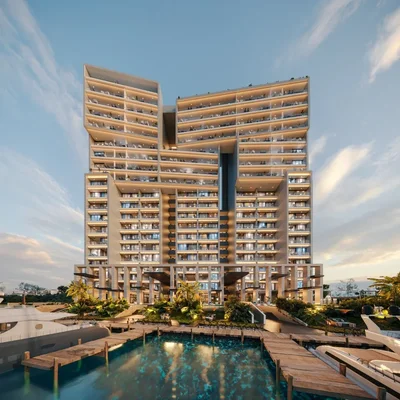
Blas

Distrito Zen

Woha
High-Growth Emerging Zones
Market Movers: The Fastest Selling Projects Right Now
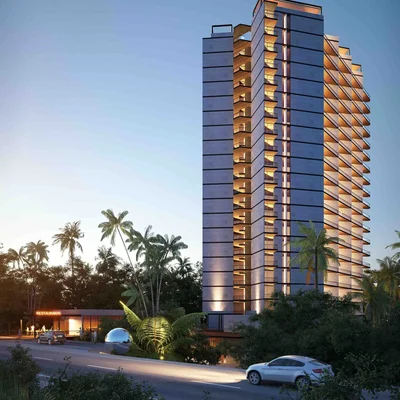
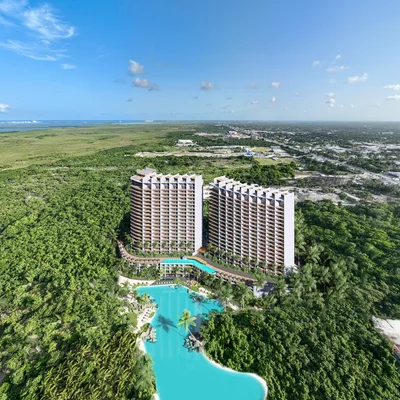
View Towers

Aurora Towers Torre Sol
Aurora Towers Torre Luna
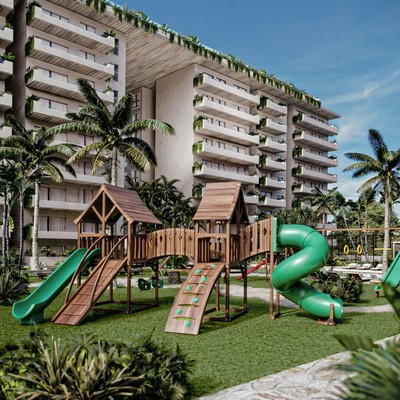
Koa Towers
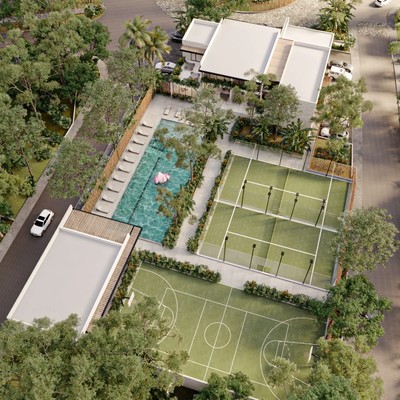
Zienna
Le Parc

Hodela